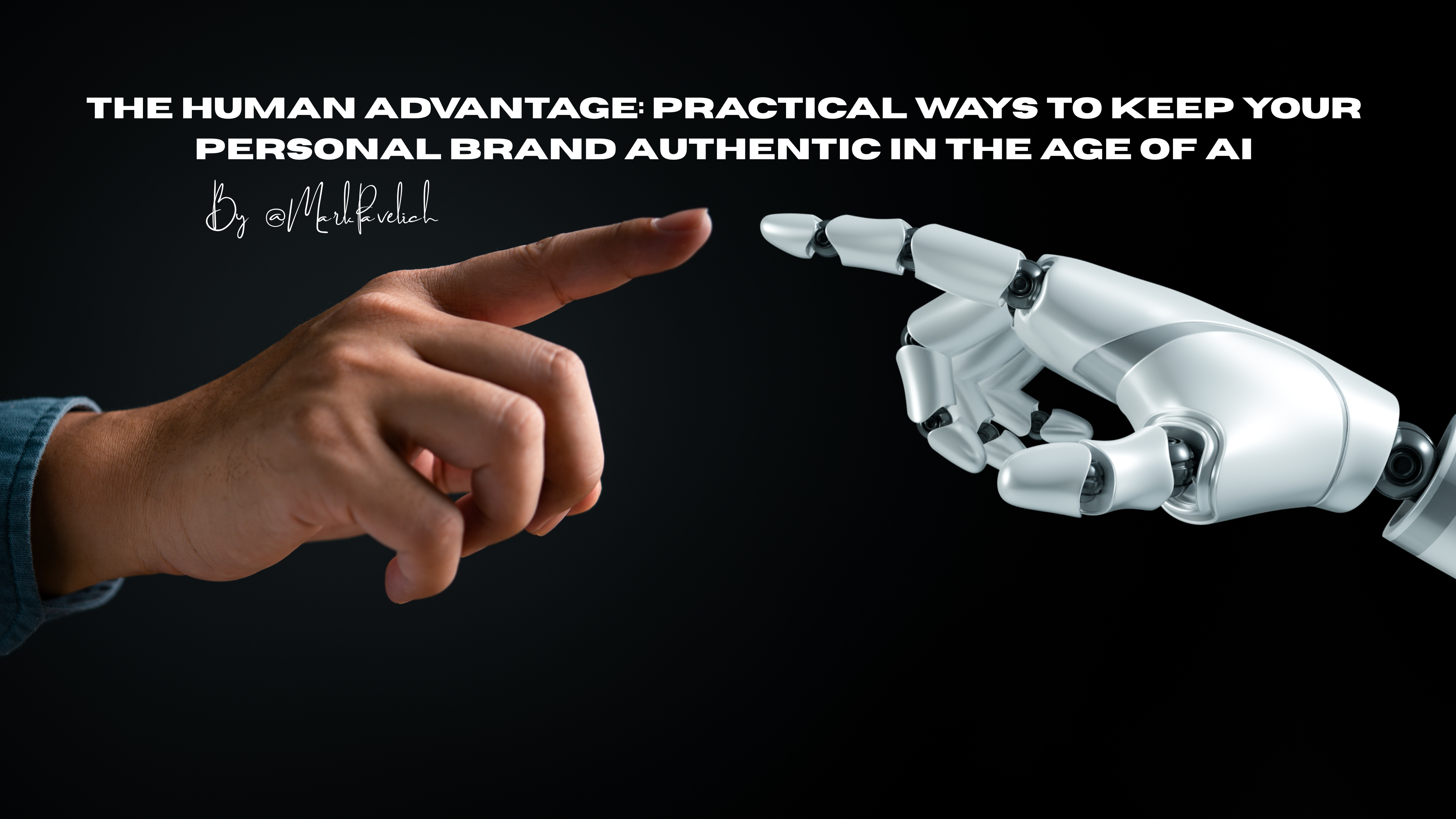
In a world where artificial intelligence can generate polished posts, professional headshots, marketing copy, and entire content calendars in seconds, standing out is no longer simply a matter of producing more content.
The greater challenge is making sure people can recognize you in what you share.
AI has made communication faster and more accessible. It can help professionals organize ideas, improve clarity, and reach audiences more consistently. However, the same tools can also make personal brands sound remarkably similar. When everyone uses the same prompts, formulas, and polished language, authenticity becomes a meaningful advantage.
Authenticity is not about sharing every detail of your personal life. It is about creating alignment between what you believe, how you communicate, and how you show up in your work. It means allowing your experience, judgment, values, and personality to remain visible.
What authenticity really means in professional branding
Authenticity is sometimes confused with informality or complete transparency. Neither is required.
A professional can be authentic while maintaining strong boundaries, communicating carefully, and presenting a polished image. The essential question is whether the public version of the professional is consistent with the person behind it.
An authentic personal brand generally has three qualities: consistency (your values and perspective remain recognizable across platforms and interactions), credibility (your claims are supported by experience, evidence, or clearly stated reasoning), and humanity (your communication includes genuine judgment, curiosity, empathy, and self-awareness).
The goal is not to appear perfect. The goal is to appear trustworthy.
1. Develop a point of view before developing a content strategy
A personal brand becomes memorable when it stands for something.
Before planning what to post, identify the principles that guide your work. What problems do you care about solving? What have your experiences taught you? Which common assumptions do you question? What do you want people to understand after interacting with your content?
These questions help you move beyond generic statements such as "I am passionate about leadership" or "I help businesses grow." They lead to a more specific perspective that sounds like a real person with real experience.
For example, instead of saying, "Good communication is important," you might write, "Most communication problems are not caused by a lack of information. They are caused by a lack of clarity about who owns the next decision." The second statement contains a point of view. It gives readers something to consider, discuss, and remember.
2. Use AI to improve your expression, not replace your perspective
AI can be a useful creative assistant. It can help you brainstorm topics, identify gaps in an outline, simplify a complicated explanation, or edit a draft for grammar and structure.
However, AI cannot provide your lived experience. It does not know which client conversation changed your approach, which mistake shaped your leadership style, or which lesson you learned the hard way unless you contribute that context.
A practical workflow is to separate thinking from polishing: start with your own experience, opinion, or observation; write a rough draft in your natural voice; use AI to improve structure, clarity, or readability; add back the specific examples and phrases that make the piece yours; then review the final version for accuracy, tone, and personal truth.
If a draft sounds polished but could have been written by anyone in your industry, it needs more of your judgment and experience.
3. Share the reasoning behind your expertise
People trust conclusions more when they understand how you reached them.
Instead of only announcing what you recommend, explain the observations or experiences that shaped your recommendation. Describe the problem, the options you considered, and what you learned from the outcome.
This does not require revealing confidential information. You can protect clients, colleagues, and sensitive business details while still sharing useful lessons.
For example, a consultant might explain how a project changed after asking a better question. A manager might describe how a failed process revealed an unclear responsibility. A designer might share why a seemingly attractive solution created usability problems. The details make expertise tangible. They show that your ideas come from practice rather than recycled slogans.
4. Let people see growth, not just achievement
A personal brand built entirely around accomplishments can feel distant. Professional audiences also want to understand how a person thinks, adapts, and improves.
Consider sharing lessons from a decision that did not work as planned, a skill you are still developing, or an assumption you have changed. The purpose is not to perform vulnerability or turn every challenge into content. The purpose is to provide an honest account of professional growth when it offers a meaningful lesson.
A useful structure is: what I believed, what happened, what I learned, and what I do differently now. This format creates a clear takeaway while preserving the human story behind it.
5. Choose substance over constant visibility
AI makes it easy to publish frequently. That does not mean frequent publishing is always valuable.
A strong personal brand is not measured only by the number of posts it produces. It is strengthened by the quality of the thinking behind those posts and by the relationships created through them.
Before publishing, ask whether the content clarifies a difficult idea, shares a lesson that others can apply, offers a distinct and defensible perspective, helps someone make a better decision, or begins a conversation worth having. If it does none of these things, it may be better to revise it or leave it unpublished.
6. Participate in conversations instead of only broadcasting messages
Authenticity is visible in interaction. It appears in the way you respond to disagreement, acknowledge another person's contribution, and ask questions without trying to control the conversation.
Thoughtful engagement often builds more trust than another promotional post. Comment on ideas you genuinely find useful. Add context from your experience. Give credit when someone has influenced your thinking. Respond with respect when you see an issue differently.
Over time, these interactions reveal your character more clearly than a carefully constructed biography can.
7. Make your boundaries part of your brand
Authenticity does not require unlimited access to your private life.
Decide in advance what you are comfortable sharing about family, health, finances, workplace relationships, and personal challenges. A clear boundary is not a lack of openness. It is a form of self-respect and professional judgment.
You can be personal without being private. Share the lesson without sharing identifying details. Discuss a professional experience without exposing someone else's story. Explain a value without turning your content into a complete account of your life.
The most sustainable personal brands are built on intentional disclosure, not pressure to reveal more.
8. Keep your public presence aligned with your real behaviour
A personal brand cannot compensate for a gap between public claims and private conduct.
If you describe yourself as collaborative, people should experience collaboration when they work with you. If you promote thoughtful leadership, your decisions should reflect thoughtfulness under pressure. If you advocate for transparency, your communication should be clear when circumstances become difficult.
The strongest brand statement is not something you publish. It is what other people consistently say about working with you.
A simple authenticity check before you publish
Before posting an article, comment, video, or professional update, ask yourself: Is this something I genuinely believe, observed, or learned? Does this sound like me when I speak with a respected colleague? Have I added enough specific context to make the idea useful? Have I reviewed the content for accuracy rather than assuming AI got it right? Would I be comfortable discussing this idea in a real conversation?
If the answer to several questions is no, the content probably needs more of your voice or it may not need to be published at all.
The future belongs to recognizable professionals
As AI continues to improve, polished content will become easier to produce and harder to distinguish. That shift will place greater value on the qualities technology cannot provide on its own: discernment, accountability, empathy, courage, and earned experience.
Professionals do not need to compete with AI by becoming more artificial. They can use AI to reduce busywork while investing more attention in the parts of their brand that require a human being.
Bring your own examples. State what you actually think. Give credit. Admit what you are still learning. Protect your boundaries. Treat every interaction as part of your reputation.
Your personal brand is not the image you manufacture. It is the pattern of trust you create over time.